Why Do Plush Toys Support Imaginative Play?

Time:2026-09-18 Author:Amelia
0%

Why Do Plush Toys Support Imaginative Play?

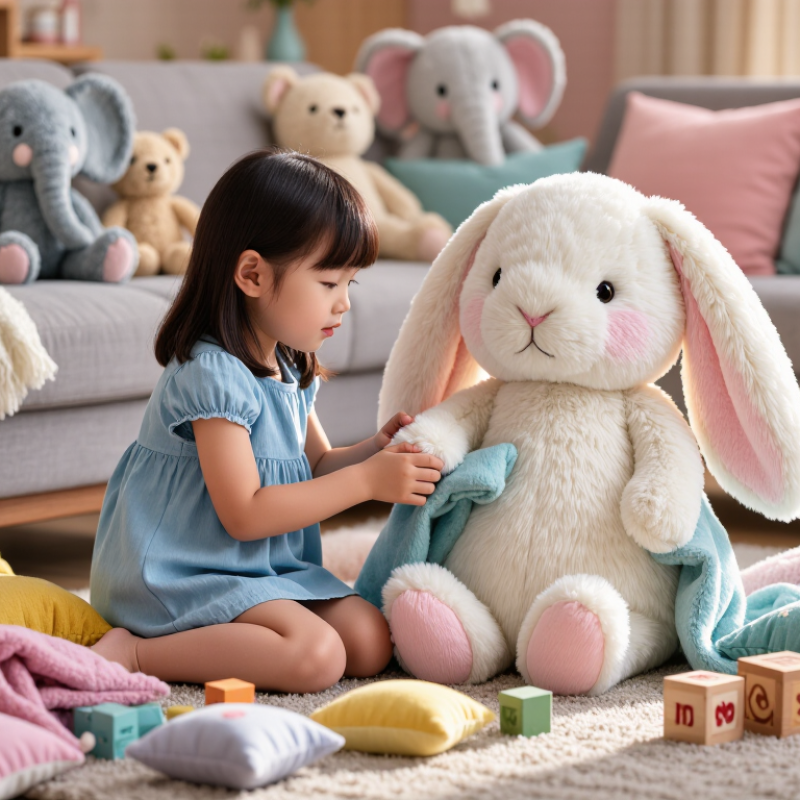
When asking “how can plush toys support imaginative play,” we should begin with a child’s everyday experience. A soft rabbit can become a doctor, a patient, or a nervous traveler. Its stitched face offers a familiar starting point, while the child supplies the voice, history, and problem. This open-ended use matters because plush toys do not require one correct way to play.

Fred Rogers, the respected child-development educator and creator of Mister Rogers’ Neighborhood, said, “Play is really the work of childhood.” His observation helps explain why pretend play deserves serious attention. Through a plush character, children practise conversation, empathy, decision-making, and emotional expression. A child may comfort a toy after a pretend fall, then create a blanket hospital beside the sofa. These small scenes can make invisible feelings easier to handle.

The evidence should still be viewed carefully. A plush toy does not automatically create imagination. Adult pressure, fixed scripts, or noisy electronic features may narrow the possibilities. The child must remain the storyteller. Parents and educators can support this process by asking gentle questions, such as, “What does your bear need now?” They can also watch rather than direct. Sometimes the story becomes repetitive. That is not necessarily a problem. Repetition may show practice, reassurance, or unfinished thinking. Yet every child plays differently, and plush toys are not a substitute for responsive relationships, varied materials, or real-world interaction. Their value lies in being familiar, flexible companions that leave room for the child’s own ideas.
Why Do Plush Toys Support Imaginative Play?

What Imaginative Play Means in Childhood Development

Imaginative play means more than pretending a plush toy can talk. It lets children test ideas, relationships, and emotions in a safe, flexible setting. A child may place the toy under a blanket, whisper a bedtime story, then become the doctor five minutes later. These small shifts practise symbolic thinking, language, empathy, and self-regulation.

The American Academy of Pediatrics’ 2018 clinical report links play with executive function, communication, and emotional development. The Lancet’s 2016 early childhood series estimated that 43% of children under five in low- and middle-income countries risked missing their developmental potential because of poverty and stunting. These findings do not prove that one toy creates better outcomes. They show why accessible play experiences deserve serious attention. Small scenes matter.

In classrooms and homes, adults can support imaginative play without controlling every plot. Ask, “What does the bear need now?” Then wait. A child might invent a hospital, a train station, or a quiet corner after an argument. Plush toys offer soft, familiar objects that can carry these changing roles. They also invite touch, which may help some children feel secure during storytelling. The evidence is imperfect. Imaginative play is difficult to measure, and children do not develop in identical ways. A toy that comforts one child may bore another. Careful observation remains essential: notice the child’s words, choices, and growing ability to imagine another viewpoint.

How Plush Toys Become Characters in Pretend Scenarios

A plush toy rarely remains just an object during pretend play. In a child’s hands, it can become a patient, a traveler, or a worried friend. A floppy rabbit may receive a blanket, a name, and a serious bedtime story. Its soft body invites carrying, hugging, and repeated handling. These physical actions help children build a believable character through touch and movement. No script is required.

Pretend scenarios often begin with ordinary moments. A child places a stuffed bear beside a toy cup and announces, “He is waiting for tea.” Soon, the bear becomes a guest with feelings and problems. The child may comfort it, correct it, or make decisions for it. This practice supports emotional expression and flexible thinking, while giving children control over a small social world. I used to assume that more realistic toys created better stories. That idea is incomplete. A simple shape can leave more room for invention.

Adults can support this play by listening before directing. Questions like “What happened to the bear?” or “Who can help?” invite detail without taking over. Developmental research commonly connects pretend play with language growth, perspective-taking, and social learning. Still, every child uses plush characters differently. Some create loud adventures; others repeat quiet caregiving routines. That variation matters. Caregivers should observe patiently, because a child’s story may reveal needs that direct questions miss. Sometimes the toy needs comfort more than instruction.

Why Do Plush Toys Support Imaginative Play? - How Plush Toys Become Characters in Pretend Scenarios
Play Dimension What Children Can Do How the Plush Toy Becomes a Character Example Pretend Scenario Primary Support
Anthropomorphic Thinking Assign human feelings, intentions, preferences, or needs to the toy. A soft toy has a recognizable body shape and face, making it easy for children to treat it as a social partner. “The bear is nervous before meeting new friends.” Emotional understanding
Role Assignment Give the toy a name, personality, occupation, family role, or story background. Because plush toys have few fixed functions, children can define their identity through language and play actions. “The rabbit is the doctor and the child is the patient.” Narrative thinking
Emotional Rehearsal Act out situations involving comfort, fear, loneliness, excitement, or conflict. Children can project emotions onto a toy and explore them from a safe psychological distance. The child comforts a plush character after a difficult day. Self-regulation
Social Communication Use the toy in conversations, turn-taking, caregiving, and cooperative storytelling. The toy provides a concrete conversational partner, even when the child is playing independently. The child asks the toy a question, pauses, and supplies its answer. Language practice
Caregiving Scripts Feed, dress, carry, protect, teach, or put the toy to bed. The toy’s small, cuddly, and dependent appearance invites nurturing routines that mirror familiar social experiences. The child prepares a blanket and bedtime story for the plush character. Empathy and responsibility
Symbolic Substitution Use ordinary objects as beds, vehicles, food, houses, or tools for the toy. Open-ended materials allow one object to represent another, which is a central feature of pretend play. A cardboard box becomes the character’s home or train. Flexible thinking
Story Sequencing Create a beginning, problem, action, and outcome for the character. A familiar toy can remain present while the child changes locations, events, and relationships around it. The character gets lost, asks for help, and returns home safely. Planning and memory
Perspective-Taking Imagine what the toy knows, wants, sees, or believes in a situation. Speaking for a character encourages children to separate their own viewpoint from the character’s imagined viewpoint. “The fox cannot see the hidden gift, so we must guide it.” Social cognition
Repetition and Mastery Repeat familiar scenes while changing one detail or outcome. A stable plush character gives children continuity, allowing them to rehearse experiences and experiment with alternatives. The child reenacts a separation scene and invents different ways for the character to cope. Problem-solving
Shared Storytelling Invite another child or adult to add dialogue, actions, and plot events. The plush character acts as a common reference point that helps players coordinate their ideas. Two children take turns deciding what the plush character should do next. Cooperation
These play functions are open-ended rather than automatic: imaginative benefits depend on the child’s age, interests, social context, and opportunities for self-directed play. A plush toy supports pretend scenarios best when children are free to assign its identity and change the story.

Ways Plush Toys Encourage Storytelling and Creative Thinking

A plush toy can turn an ordinary bedroom into a small stage for stories. A child may place a bear beneath a chair, whispering that it is hiding from rain. The toy becomes a character, not just a soft object. Its simple face leaves room for interpretation, so children invent names, motives, and dialogue. I have watched children pause mid-story, then change the ending when a toy “gets lost.” That small interruption often produces richer language and flexible thinking. Sometimes, the plot makes no sense. That is useful too.

During pretend play, children practice sequencing events, solving problems, and reading emotional cues. A plush rabbit might feel afraid, miss its family, or learn to share a blanket. These scenes give abstract feelings a visible form, which can make difficult conversations less intimidating.

Child-development specialists commonly connect imaginative play with communication and self-regulation, although every child plays differently. Adults can support the process by asking, “What happened next?” rather than correcting every detail. A cardboard box can become a train station. The story may wander.

That is not failure.

I sometimes offer too many suggestions, and the child loses ownership of the tale. Stepping back works better: watch closely, listen, and add one gentle question when the story needs space.

The Role of Emotional Attachment in Imaginative Play

Why Do Plush Toys Support Imaginative Play?
The Role of Emotional Attachment in Imaginative Play

Emotional attachment can turn a plush toy into more than a soft object. A child may treat it as a patient listener, worried traveler, or brave companion. Its familiar texture and small, recognizable shape create emotional safety during uncertain play. Developmental psychologists often connect this security with stronger pretend play and emotional expression.

I have seen children place a toy beneath a blanket, whisper a secret, then invent a rescue mission. The toy does not judge or interrupt. This allows children to rehearse friendship, conflict, care, and separation at their own pace. A child might scold the toy for breaking a rule, then offer it a warm cup from a toy kitchen. These actions can reflect real feelings without requiring direct explanations.

Attachment does not work identically for every child. Some children prefer figures, cardboard boxes, or imaginary friends. Adults should avoid assigning deep meaning to every invented story. I once assumed a quiet child felt anxious, but the child was simply concentrating on building a hospital. That mistake matters. Gentle questions usually help more than confident interpretations. When adults follow the child’s lead, imaginative play can become a private space for testing emotions, relationships, and possible solutions.

Why Do Plush Toys Support Imaginative Play?

Emotional attachment can make a plush toy feel like a familiar social partner. This sense of safety may encourage children to assign roles, practice emotions, and create increasingly complex pretend-play stories.

Developmental research commonly places early object substitution around 18–24 months, simple pretend routines around 24–36 months, role-based pretend play around 36–48 months, and more cooperative narratives around 48–60 months. A familiar plush toy can support these stages by providing a stable object for symbolic representation, emotional expression, and social storytelling.

How Open-Ended Toy Features Support Independent Play

Why Do Plush Toys Support Imaginative Play?

How Open-Ended Toy Features Support Independent Play

Plush toys invite children to create meaning instead of following fixed instructions. A soft animal can become a patient, a passenger, or a worried friend. Its role changes with the child’s ideas. That flexibility supports independent play because children choose the setting, dialogue, and rules themselves. A simple shape, movable arms, or a neutral facial expression leaves room for interpretation. One day, the toy may sleep beneath a blanket. The next, it may travel through a cardboard “storm.”

From a child-development perspective, open-ended play can strengthen language, emotional expression, and problem-solving. Children often rehearse real experiences through pretend conversations. They might comfort a toy after a fall, share imaginary food, or explain why a character feels angry. Adults can support this process by watching, listening, and asking gentle questions without taking control. “What does the bear need?” is more useful than directing every action. Keep it simple.

I once assumed that more accessories would create richer play. In practice, too many features sometimes narrowed the story. A child focused on buttons and sounds instead of inventing a scene. This is not always tidy. Independent play may include repeated plots, quiet pauses, or strange rules adults do not understand. Those moments still matter. A washable, durable plush toy also helps children return to familiar stories, revise them, and slowly make the play their own.

FAQS

How can a plush toy become a character during pretend play?

A child may give it a name, blanket, voice, and problem. A floppy rabbit can become a tired traveler or worried friend. Touch and movement make the character feel believable.

What kinds of stories do children create with plush toys?

Stories often begin with ordinary scenes. A bear waits beside a toy cup for tea. It may later become a guest, patient, traveler, or lost friend. The plot may wander.

How does pretend play support creative thinking?

Children invent motives, dialogue, and changing endings. A missing toy can create a rescue mission. This encourages sequencing, problem-solving, and flexible thinking.

Can plush toys help children express emotions?

Yes, sometimes. A child may comfort a frightened rabbit or scold it for breaking a rule. These actions can give difficult feelings a safer, visible form.

What should adults say during plush-toy storytelling?

Ask gentle questions, such as “What happened next?” or “Who can help?” Listen before directing. Too many suggestions may take away the child’s ownership.

Does a realistic toy create better pretend stories?

Not necessarily. A simple shape can leave more space for invention. Children may create names and personalities without many fixed details. My earlier assumption was incomplete.

Can attachment to a plush toy make imaginative play feel safer?

A familiar texture can provide comfort during uncertain play. The toy may become a quiet listener or brave companion. This can support emotional expression, but not every child responds similarly.

Should adults interpret every invented story deeply?

No. A quiet hospital game does not automatically mean anxiety. I once made that mistake. Gentle questions usually help more than confident interpretations.

Do all children use plush toys in the same way?

No. Some children create noisy adventures. Others repeat quiet caregiving routines. Some prefer boxes, figures, or imaginary friends. That variation deserves patience.

Conclusion

Imaginative play is an important part of childhood development because it helps children explore ideas, express emotions, practice communication, and understand everyday experiences. Plush toys can easily become friends, family members, animals, or characters in make-believe situations, allowing children to create stories and act out different roles. Through these pretend scenarios, children develop language skills, flexible thinking, problem-solving abilities, and confidence in making creative choices.

A key reason how can plush toys support imaginative play is their emotional and open-ended nature. Children may form strong attachments to soft toys, using them as comforting companions while sharing feelings or working through challenges. Because plush toys do not have fixed rules or a single purpose, children can decide what each toy represents and how the story unfolds. This freedom encourages independent play, storytelling, creativity, and personal expression while giving children space to build imaginary worlds at their own pace.

Amelia

Amelia

Amelia is a seasoned marketing professional with a wealth of expertise in our company’s core offerings. With an unwavering passion for driving growth and innovation, she plays a pivotal role in shaping our marketing strategies and enhancing brand visibility. A key aspect of her responsibilities......