Choosing a plush toy for a newborn is not simply a matter of softness, color, or an appealing face. Parents also need to consider loose fibers, stitched features, washable fabrics, attached ribbons, and the toy’s size. A small nursery detail can become a serious concern when a baby sleeps, drools, or mouths the toy.
So, what are the safest plush toys for newborns? This guide examines seven options through established safety principles, not marketing claims. The American Academy of Pediatrics advises keeping soft objects, including stuffed toys, out of an infant’s sleep area. That recommendation matters because newborns have limited head control and cannot reliably move away from an obstructing object. For supervised cuddling, a lightweight plush toy with embroidered details may be more appropriate than one with plastic eyes, long fur, or detachable accessories.
The U.S. Consumer Product Safety Commission’s Toy-Related Deaths and Injuries report estimated 231,100 toy-related emergency-department injuries among children under 15 in 2023. The report does not mean every plush toy is dangerous, but it shows why careful selection deserves attention. ASTM F963, the widely recognized toy safety standard, also addresses materials, seams, small parts, and accessible stuffing. Look for clear age guidance and independently tested construction. Yet no label replaces inspection. Seams can weaken. Washing can expose damage. Even a carefully chosen toy should remain outside the crib and be checked regularly for loose threads, odor, or broken parts. This review offers practical guidance, but it cannot remove every risk. That limitation deserves honesty.
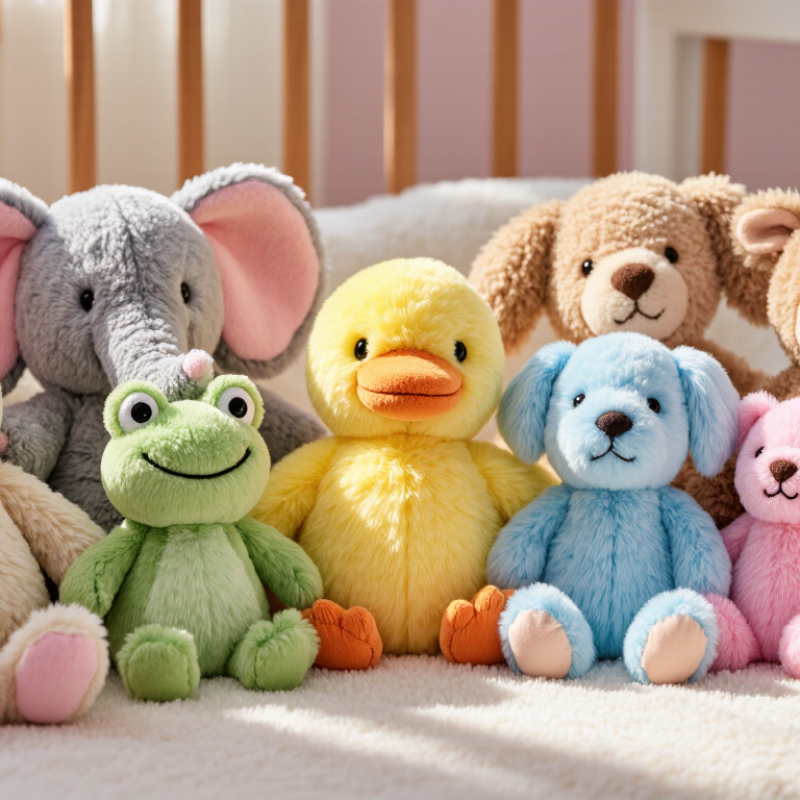
A newborn should use a plush toy only during supervised, awake moments. The American Academy of Pediatrics advises keeping soft objects, including stuffed toys, out of infant sleep spaces. This guidance matters because a soft toy can cover a baby’s nose or mouth during a quiet nap. Never place plush toys in a crib, bassinet, or portable sleep area.
Choose a simple, one-piece design with embroidered eyes and facial details. Avoid plastic eyes, buttons, beads, ribbons, long cords, and detachable accessories. Small parts can become choking hazards when seams weaken. The U.S. Consumer Product Safety Commission reported 231,700 toy-related emergency department injuries in 2023. That figure covers all toy types, but it shows why careful inspection matters.
Check the age label and the stitching. Firm seams matter. Gently pull the ears, nose, and decorative parts before use. Wash the toy according to its care label, then inspect it again after drying. A plush toy should have no strong chemical odor, loose fibers, or shedding filling. Some parents prefer very soft, fluffy fabrics, but excessive pile can collect dust and become difficult to clean. That preference deserves reconsideration. Safety is not just softness; it is supervision, durability, cleanability, and distance from the baby’s face. Standards such as ASTM F963 provide useful safety benchmarks, but no certification replaces regular inspection.
Newborn-friendly plush toys should be simple, washable, and easy to inspect. A one-piece plush animal offers gentle comfort without detachable accessories. A flat lovey provides a soft texture for supervised daytime cuddling. A plush sensory cube can include safe crinkle panels and varied fabrics. A soft rattle may support early grasping when its filling stays securely sealed. A fabric teether plush can help sore gums, but only if it is designed for infants. A tummy-time plush mirror encourages head lifting with a shatter-resistant surface. A large hand puppet can support face-to-face play when an adult controls it carefully.
Choose toys with embroidered features instead of plastic eyes, beads, buttons, or glued decorations. Short, dense fabric is easier to clean and less likely to shed fibers. Check seams before every use. A small tear can quickly become a choking risk. Avoid long ribbons, loose strings, weighted inserts, and strong fragrances. Wash the toy according to its care label, then inspect it again. I once assumed “extra soft” meant safer, but thick fur can hide damage and collect moisture. Never place plush toys, loveys, or puppets in a newborn’s sleep space. Use them during awake, supervised moments, and remove them when the baby becomes sleepy.
For newborns, plush-toy safety begins with materials, not appearance. Choose tightly woven fabric with no loose fibers, glitter, plastic film, or strong chemical odor. A washable toy is more practical because milk, saliva, and dust collect quickly. Look for clear fiber information and colorfast fabric. “Non-toxic” alone is too vague.
Construction needs closer inspection. Pull gently at the eyes, nose, ears, and stitching. Nothing should detach, even after repeated washing. Avoid ribbons, long cords, beads, magnets, and small decorative pieces.
The U.S. Consumer Product Safety Commission reported an estimated 231,700 toy-related emergency-department injuries among children under 15 in 2023. That figure covers all toy types, not plush toys alone, but it shows why small parts deserve attention.
Check the seams again after washing. I sometimes forget this step.
Tips: Select a toy larger than the baby’s mouth, but never oversized or heavy. A newborn should not sleep with any plush toy, pillow, or loose blanket. The American Academy of Pediatrics recommends keeping soft objects outside an infant’s sleep space.
During supervised play, place the toy beside the baby, not over the face. Check the label for ASTM F963 or applicable safety testing information. If stuffing appears, stitching opens, or the toy develops a sharp edge, remove it immediately. No repair is worth guessing.
Safe Ways to Introduce Plush Toys During Early Development
When comparing seven plush toys for newborns, safety matters more than softness or appearance. The American Academy of Pediatrics advises keeping stuffed toys, blankets, and other soft objects outside an infant’s sleep space. This applies especially during the first year, when babies cannot reliably move objects away from their faces.
Use plush toys only during supervised, awake time. Choose a small, lightweight toy with embroidered features, tight stitching, and no detachable parts. Avoid ribbons, plastic eyes, long fur, buttons, loose filling, and internal sound components. A simple hands-on check helps: pull the seams gently, inspect the surface, and wash the toy according to its care label. It should dry completely.
Start with brief sessions on a clean play mat. Place the toy beside the baby, not over the face or inside the crib. Watch for chewing, coughing, tangled fingers, or fabric shedding. Stop immediately if any problem appears. The U.S. Consumer Product Safety Commission regularly reports recalls involving children’s products, showing why routine inspection matters. The CDC recorded about 3,700 sudden unexpected infant deaths in 2022; this figure does not prove plush toys caused them, but it supports strict sleep-space precautions.
A practical mistake is assuming “new” means safe. Inspect every toy after washing and after rough play. Replace it when seams open or stuffing becomes accessible. Ask a pediatric professional about individual risks, especially for premature babies or infants with breathing concerns.
This checklist highlights seven practical safety conditions for introducing plush toys during early development. A score of 1 means the condition supports safer use; 0 means it should be avoided.
Plush toys are best offered during supervised, awake play. Keep soft objects out of a newborn’s sleep space, and avoid toys with loose parts, long cords, ribbons, detachable decorations, or damaged seams. Choose a washable toy that is appropriate for the child’s age and inspect it regularly.
For newborns, a plush toy should never stay in the crib during sleep. Soft objects can cover a baby’s nose or mouth, even when they look harmless. Keep the sleeping space firm, flat, and empty. Offer a plush toy only during awake time, while an adult watches closely. Remove it before naps, nighttime sleep, or leaving the room.
Check the toy every few days. Look for loose stitching, torn fabric, leaking filling, detached eyes, ribbons, or small plastic parts. A rough seam can scratch delicate skin. Long fibers may reach a baby’s mouth. Replace the toy immediately if it smells musty, feels lumpy, or cannot be washed thoroughly. A toy that shrinks or hardens after cleaning may also need retirement. Follow the care label, but do not trust cleaning alone to repair damage.
Age guidance matters. Choose a lightweight toy with embroidered details and no detachable accessories. Avoid toys with batteries, magnets, heating elements, or long cords. Place the toy beside the baby during supervised floor play, not under the baby’s head. This is easy to forget. Adults often focus on softness and appearance, while hidden damage receives less attention. I would rather replace a favorite toy early than keep it because it carries sentimental value. Even careful routines can fail on busy days, so a short crib check before sleep is worth repeating.
No. Keep every plush toy out of the crib, bassinet, and portable sleep space. Soft objects can cover the baby’s nose or mouth.
Use it only during awake moments with an adult watching closely. Place it beside the baby, never over the face. Remove it before naps.
Choose a lightweight, one-piece toy with embroidered eyes and facial details. Avoid buttons, beads, ribbons, cords, magnets, and detachable parts. Simpler is safer.
Check the age label and stitching. Gently pull the ears, nose, eyes, and decorative areas. Nothing should loosen or detach.
Choose tightly woven, washable fabric without glitter, loose fibers, plastic film, or strong chemical odors. “Non-toxic” alone gives too little information.
Follow its care label, then inspect it after drying. Look for opened seams, hardened fabric, shrinking, loose fibers, or exposed filling. Inspect it again.
Replace it immediately when stitching opens, filling leaks, parts detach, or sharp edges appear. A musty smell or lumpy texture also signals retirement.
Not always. Thick, fluffy fabric can collect dust and become difficult to clean. Safety also depends on supervision, durability, and distance from the baby’s face.
No. Safety testing information can help, but regular inspection remains necessary. I sometimes forget the second check after washing, and that can matter.
Choose one larger than the baby’s mouth, but never oversized or heavy. Keep it beside the baby during supervised floor play. Never place it under the head.
Choosing what are the safest plush toys for newborns begins with prioritizing simple, well-constructed designs made from breathable, non-toxic, washable materials. Suitable options may include small stuffed animals, soft sensory toys, lightweight comfort toys, crinkle-free fabric toys, gentle textured toys, washable plush rattles without loose parts, and flat lovey-style toys. Each toy should be age-appropriate, securely stitched, free from buttons, beads, ribbons, plastic eyes, long fur, and detachable decorations, while remaining large enough to prevent swallowing but light enough for easy handling.
Plush toys should be introduced only during supervised, awake play, allowing babies to explore textures and practice reaching, grasping, and visual tracking. They should never be placed in a newborn’s sleep area, crib, bassinet, or near the face because soft items can obstruct breathing. Check toys regularly for tears, loose seams, shedding fibers, odors, or damaged parts, and wash them according to their care instructions. Remove and replace any toy that becomes worn, contaminated, or too small for safe use.

Petto Toys